Commodities and stocks continue to drive solid gains in global asset allocation strategies in 2026, based on a set of ETFs tracking the major asset classes through Friday’s close. Upside momentum among the leading performers has stalled in recent weeks, however, as inflation concerns and geopolitical risks weigh on investor expectations. Even so, the data currently in hand leave little doubt that risk assets remain the primary source of strength, providing a favorable backdrop for diversified portfolios.
Book Bits: 24 October 2026
 ● Hyperscale: The Ambition and Excess of Big Tech’s Data Empires
Paris Marx
Review via CNET
There is no stronger metaphor for the manifestation of Big Tech’s power than the increasing sprawl of data centers. Amazon, Microsoft and Google alone control 59% of hyperscale data center capacity. In his new book available now, Hyperscale: The Ambition and Excess of Big Tech’s Data Empires, Marx, host of the Tech Won’t Save Us podcast, highlights how global data center protests are one of many ways that communities are pushing back against Big Tech’s power over us…. Before, a large data center might require around 50 megawatts of power to keep everything running. Now, hyperscale data centers can require triple that amount of power. Newer ones, like Meta’s Louisiana data center, may require 4,500 megawatts (4.5 gigawatts) — staggering demand that officials say is four times more than all of the electricity used in New Orleans on its hottest day in 2025. It’s more than the two gigawatts the Hoover Dam produces.
Bond Market Tests the Inflation Narrative as Yields Tumble
U.S. Treasury yields dropped sharply on Thursday, marking the largest one-day decline in recent history and reigniting questions about whether rates have peaked. At the center of the debate over where the bond market goes from here is the tension between the outlook for inflation vs. growing concerns about economic growth and geopolitical risk.
Oil Signals Geopolitical Risk Is Back on the Radar
Oil prices are climbing again and are approaching the highs reached during the early stages of the Iran conflict. The latest advance reflects growing concerns about renewed conflict in the Middle East, fueled by reports that the U.S. and Israel may resume military action against Iran after the midterm elections. Regardless of the trigger, a breakout to new highs in oil would be an unwelcome development for financial markets at a time when inflation risks remain elevated.
Housing Is Weak, but Its Impact on the Business Cycle Is Muted
There was a time when economists argued that housing was not only a key component of the economy, but also the primary driver of the business cycle. That relationship appears far more tenuous these days, and for now that’s good news given the weakness in residential construction and home buying.
Energy Stocks Lead This Year, But Tech Still Drives the S&P 500
The US stock market is on track for a fourth consecutive year of double-digit gains, but the sector leading the performance race is not necessarily driving the market. Energy stocks have been the standout performers in 2026, soaring far ahead of every other sector, including technology. Yet tech remains the primary force behind the S&P 500’s advance because it carries a much larger weight than energy in the market-cap-weighted index.
GDP Nowcasts Point to Faster Growth as Inflation Risks Mount
For anyone expecting that slower US economic growth will help cool inflation in the near term, the latest nowcasts for next week’s third-quarter GDP report offer little support.
Book Bits: 17 October 2026
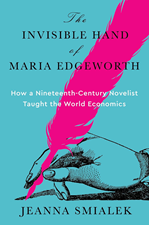 ● The Invisible Hand of Maria Edgeworth: How a Nineteenth-Century Novelist Taught the World Economics
Jeanna Smialek
Interview with author via Marketplace
You may have learned in grade school that Adam Smith originated many of the ideas behind modern economics in his book “The Wealth of Nations.” Maybe you’ve also heard about Thomas Robert Malthus or John Maynard Keynes, economists who are also remembered for their contributions to the field. But chances are, you probably haven’t heard of Maria Edgeworth — at least not for her contribution to economics.
Edgeworth was a Regency-era novelist who, at one point, was England’s most popular writer.
“Jane Austen was a Maria Edgeworth fangirl,” said Jeanna Smialek, Brussels bureau chief at The New York Times. “She’s obsessed with Maria Edgeworth and is sending her letters and being like, ‘please review my books.’’’
But Smialek also found that Edgeworth was deeply engaged in economics, corresponding with peers like David Ricardo and Thomas Malthus, and working the ideas from Adam Smith into her novels.
The Case for Another Rate Hike Is Growing Stronger
Federal Reserve Chairman Kevin Warsh reaffirmed his vow to “deliver price stability” in a speech on Friday, a day after a second inflation report in as many days highlighted the growing challenge to achieving that goal in the near term.
Inflation Concerns Push 10-Year Yield Further Above Fair Value
The yield premium on the U.S. 10-year Treasury note continued to rise in September, driven by concerns over inflation and government debt. The benchmark yield climbed sharply last month, pushing the spread between the market rate and The Capital Spectator’s estimate of fair value to its widest level in nearly two years.